The storefront says “in stock”. The shelf decides whether that is true
Marketplaces and shop platforms track what they sold. They do not track the box that got damaged, the return that went back on the shelf, or the units you took to a market stall.
Between platform stock and real stock there is always a gap, and the gap is made of things that happen off-platform: breakages, returns, samples, and the order that was picked but never shipped.
When the gap gets big enough you oversell, and overselling costs more than the item: it costs the rating.
-
01
Reorder levels per product
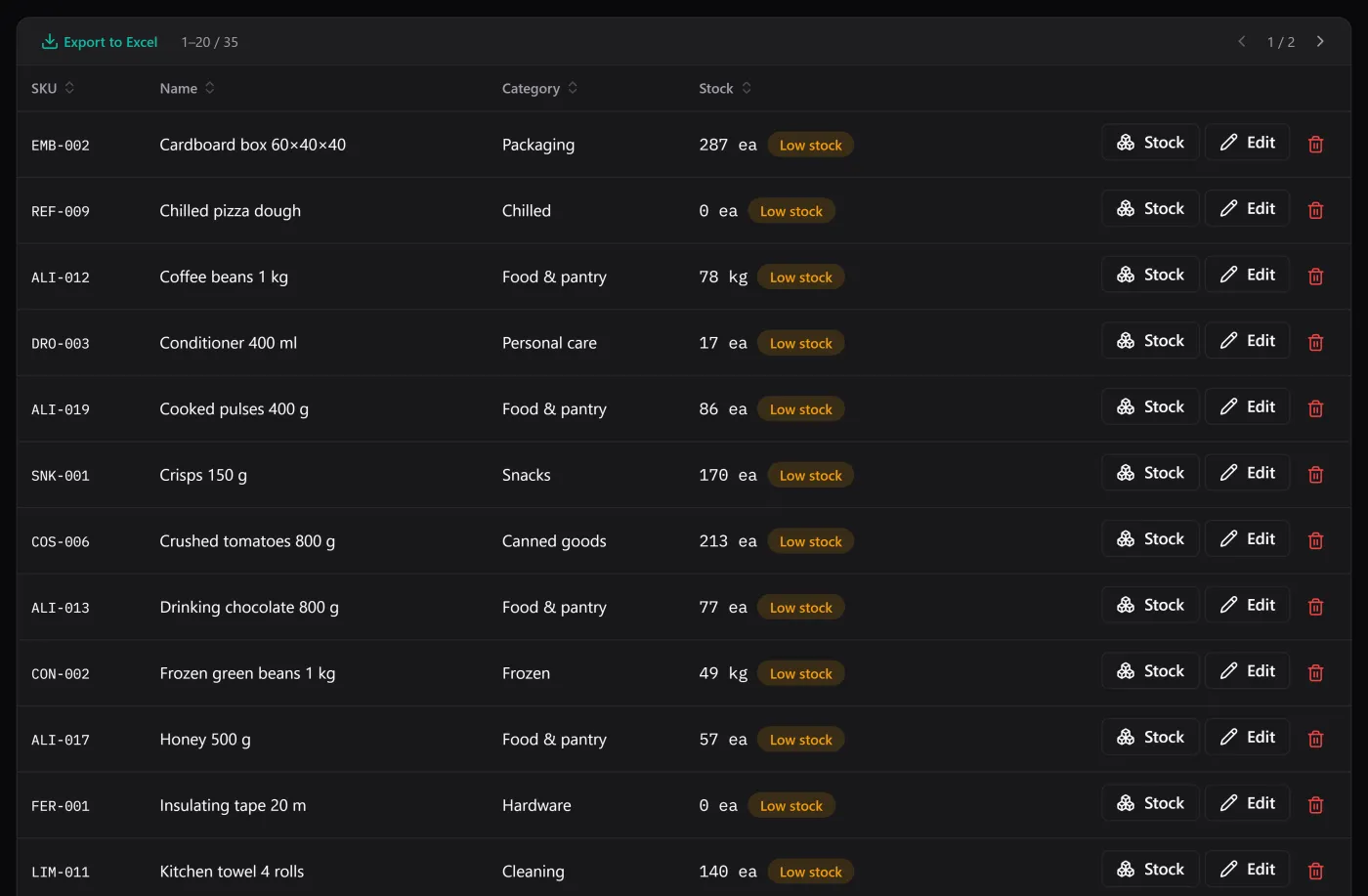
Set the minimum you never want to fall under; the dashboard counts what is below it and the list filters to it in one click.
-
02
Exits as they really happen
Picking, breakage and returns are all movements with a reason, so the count follows reality rather than the platform.
-
03
Export that fits any upload
Every list exports to CSV with the filters you applied — the format every marketplace and spreadsheet accepts.
-
04
Ask instead of filtering
With the optional assistant you can ask “which items are below their reorder level?” and get the list back as a table.
Where it stops There is no integration with Shopify, Amazon or WooCommerce: BasicInventory does not sync with your storefront, it keeps the physical count honest beside it.